
Tokyo
I have never been a great fan of big cities.
Usually, the bigger they get, the less I like them. Too many people, too much traffic, too much concrete and far too much noise. So Tokyo should, in theory, have been exactly the sort of place I would hate.
It wasn't.
In fact, Tokyo was the exception that proved the rule.
This is a gigantic city, and by any normal standards it should be overwhelming. Yet somehow Tokyo manages to make its sheer size one of its greatest attractions. What makes it particularly fascinating is the extraordinary contrast between the old and the new.
One minute you can be surrounded by neon lights, skyscrapers and technology that looks as though it has arrived from the future. A few streets later, you can find a quiet temple, a traditional garden or an ancient shrine where the pace of life seems to have slowed down completely.
That contrast is sublime.
The Transport
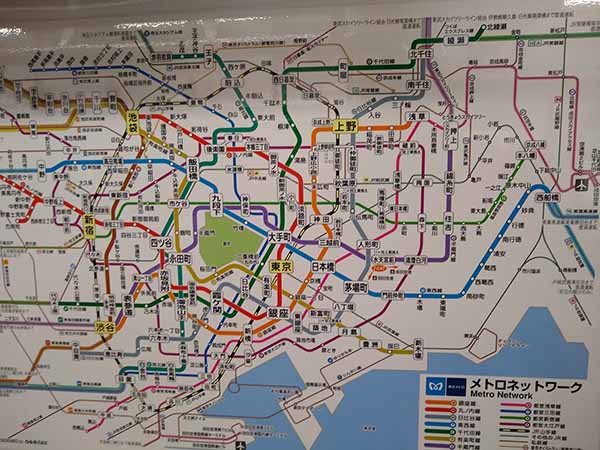 Tokyo's transport system is an impressive part of the experience.
The trains are frequent, clean and incredibly efficient. The network looks terrifying when you first see it, but once you understand how it works, getting around becomes surprisingly straightforward.
The only problem is that Tokyo has an awful lot of people who also want to use the trains.
At busy times, the stations can become almost as much of an attraction as the city itself.
You may emerge from one completely unsure whether you have actually travelled anywhere or simply been carried along by the human tide.
Shibuya
If you want to understand modern Tokyo, head for Shibuya.
The famous Shibuya Crossing is probably the most recognisable image of the city. When the lights change, hundreds of people pour into the crossing from every direction, somehow managing to avoid walking into one another.
It is one of those things that sounds rather silly when you describe it.
Then you stand there and watch it happen.
Around the crossing, Tokyo is at its most futuristic. Huge video screens dominate the buildings, neon signs compete for attention and the streets are packed with people.
It is busy, noisy and slightly bonkers.
And I loved it.
Shinjuku
Shinjuku provides another enormous dose of modern Tokyo.
Skyscrapers dominate the skyline, while below them are restaurants, shops, bars, arcades and streets that seem to go on forever.
At night the place becomes particularly impressive. Neon signs illuminate the streets and there seems to be no obvious point at which Tokyo decides it is time to go to bed.
The famous Kabukicho entertainment district is here as well, although this is one part of Tokyo where wandering around with your eyes open is advisable. It is colourful and fascinating, but it is also very much the adult side of the city.
Tokyo has many personalities.
Shinjuku just happens to have several of them in the same few streets.
The Tokyo Skytree
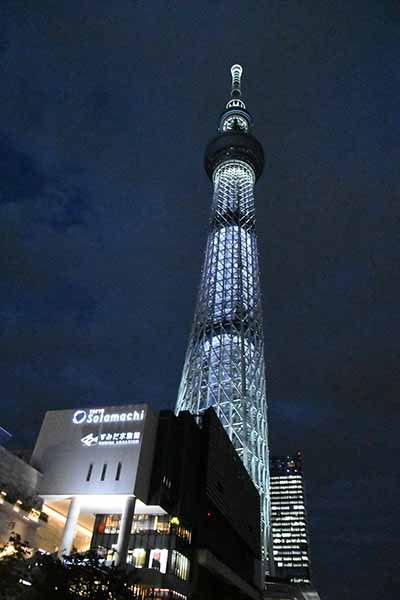 For a completely different perspective, head up the Tokyo Skytree.
At over 600 metres, it is an astonishing structure and provides a vast panorama across the city.
And what becomes immediately obvious from the top is just how enormous Tokyo really is.
The city seems to stretch endlessly in every direction. Buildings continue towards the horizon and it becomes almost impossible to work out where Tokyo ends and the surrounding urban areas begin.
For somebody who isn't normally a fan of cities, this should have been terrifying.
Instead, I found it fascinating.
The Old Tokyo
And then Tokyo does something rather clever.
Just when you think you have seen the futuristic side of the city, it suddenly gives you something much older.
Asakusa is one of the best places to experience this.
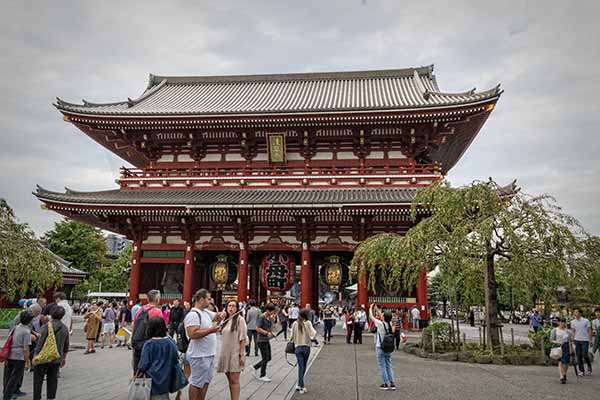 The area is dominated by Senso-ji, Tokyo's oldest temple, and the approach through Nakamise-dori is lined with traditional shops and stalls. The enormous red Kaminarimon Gate provides one of Tokyo's classic photographs, while the temple itself provides a remarkable contrast to the modern city surrounding it.
Stand there for a moment and look around.
You are in one of the world's most technologically advanced cities, yet you are standing outside a Buddhist temple with a history stretching back centuries.
That is Tokyo.
Meiji Shrine
Another excellent example of the old and new sitting side by side is Meiji Shrine.
It is surrounded by a large wooded area and feels remarkably peaceful considering that it is located in the middle of one of the world's largest cities.
Walk through the enormous torii gates and suddenly the skyscrapers and traffic seem to disappear.
The contrast is extraordinary.
You can go from the madness of Shibuya to the tranquillity of the shrine in a matter of minutes.
That is one of the things that makes Tokyo so special.
The Imperial Palace
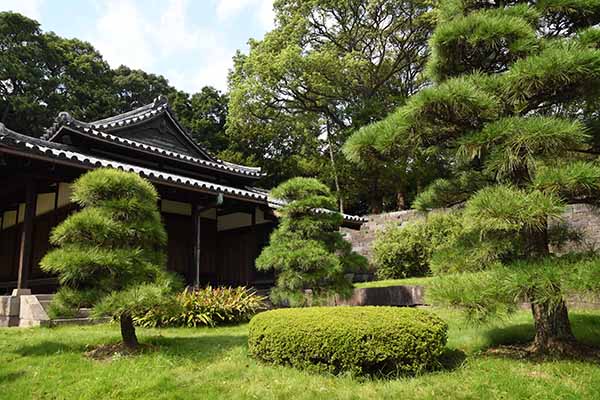 The Imperial Palace sits in the heart of Tokyo and provides another glimpse of the city's history.
Much of the palace itself isn't open to visitors, but the surrounding grounds and gardens are worth exploring.
Again, it is the contrast that makes it interesting.
Modern office buildings tower around the area, yet behind the walls are gardens, historic structures and remnants of old Tokyo.
It is almost as though the city has grown up around its history rather than simply destroying it.
Tokyo's Parks and Gardens
Tokyo has some surprisingly beautiful green spaces.
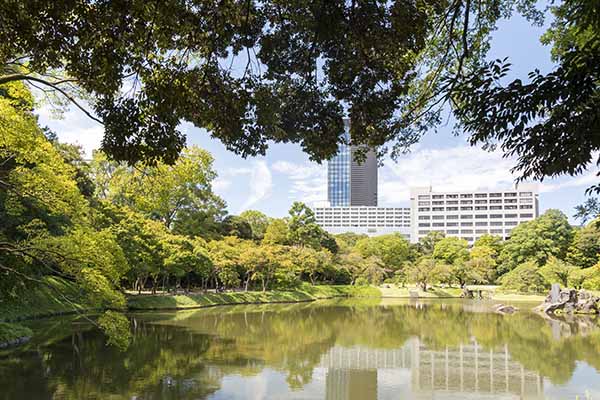
Ueno Park is particularly popular and contains museums, temples, shrines and plenty of open space.
Then there are the Japanese gardens, which provide exactly the sort of calm escape you might need after spending several hours fighting your way through Tokyo's crowds.
The gardens are beautifully maintained, with ponds, bridges, trees and carefully arranged landscapes.
They are another reminder that Japan doesn't necessarily see modernisation and tradition as opposites.
Tokyo seems perfectly happy to have both.
The Food
Tokyo is also a fantastic place to eat.
And this is where things can become rather dangerous for the waistline.
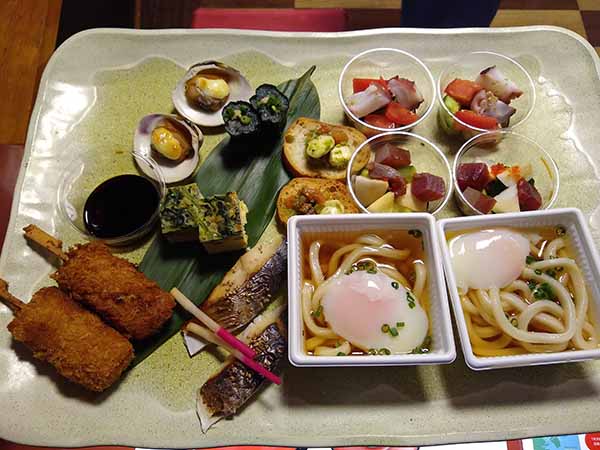 You can eat extraordinarily well without necessarily spending a fortune. Sushi, ramen, tempura, yakitori and countless other Japanese specialities are available everywhere.
Then there are the restaurants where you have absolutely no idea what is going on but the food looks and smells fantastic.
I rather like that.
Japanese food is generally beautifully presented, although there are times when you wonder whether you are supposed to eat the thing or simply admire it.
And don't assume that everything has to be expensive.
Some of the best meals can be found in small, unassuming establishments tucked away down side streets.
The Tokyo Experience
One of my favourite things about Tokyo is simply wandering around.
Forget the itinerary occasionally.
Get off the train somewhere you haven't planned to visit and see what you find.
You might discover a tiny shrine squeezed between office buildings, a narrow street filled with restaurants, a traditional house hidden behind a wall or a completely mad shopping district selling things you never knew existed.
Tokyo rewards curiosity.
It is a city where you can spend an entire day sightseeing without ever actually visiting one of the famous attractions.
And that's part of the fun.
My Verdict
Tokyo completely changed my opinion of big cities.
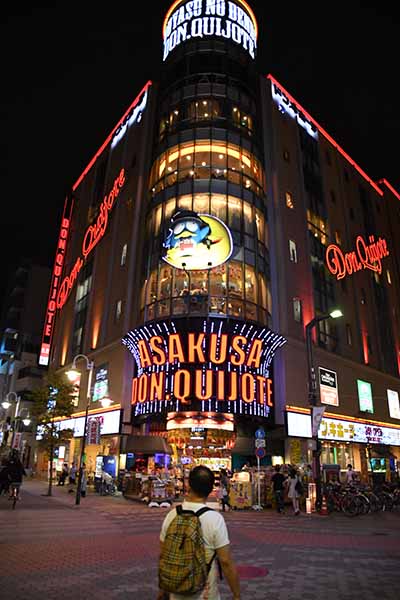 I expected to find a vast, impersonal urban monster and instead found a city with an extraordinary personality.
Yes, it is enormous.
Yes, it is crowded.
Yes, there are times when you will wonder how there can possibly be this many people in one place.
But somehow it works.
The modern Tokyo of Shibuya, Shinjuku and the Skytree is spectacular. The traditional Tokyo of Asakusa, Meiji Shrine, the Imperial Palace and the gardens is equally fascinating.
And the fact that these two worlds exist side by side is what makes the city so special.
Tokyo doesn't seem to have decided whether it wants to be an ancient Japanese capital or a glimpse of the future.
It has simply decided to be both.
For somebody who isn't normally a great fan of big cities, Tokyo was the exception that proved the rule.
It is busy, frantic, enormous and occasionally completely bonkers.
But it is also fascinating, remarkably efficient, incredibly clean and full of surprises.
Most importantly, it never feels as though the old Japan has been sacrificed to create the new one.
The two simply coexist.
And that, for me, is the magic of Tokyo.
Prices correct as at August 2026
Return to Japan Home Page