
Troy
There are some historical sites where you can stand and immediately feel the importance of what happened there. Troy is slightly different. Here, you are standing somewhere that was already famous more than 2,000 years ago — and where the line between history and legend is still wonderfully blurred.
Troy, or Truva as it is known in Turkey, is associated forever with Homer's Iliad, the Trojan War, Helen of Troy and the famous wooden horse. For centuries, however, people weren't even certain that Troy had really existed.
Today we know that there was a major ancient settlement here, with archaeological evidence showing that the site was occupied over many centuries. The archaeological site of Troy was designated a UNESCO World Heritage Site in 1998.
And that is what makes visiting so fascinating.
Admission to the Archaeological Site of Troy costs €27.00 for non-Turkish adult visitors, with an additional €27.00 to enter the museum.
The Trojan Horse
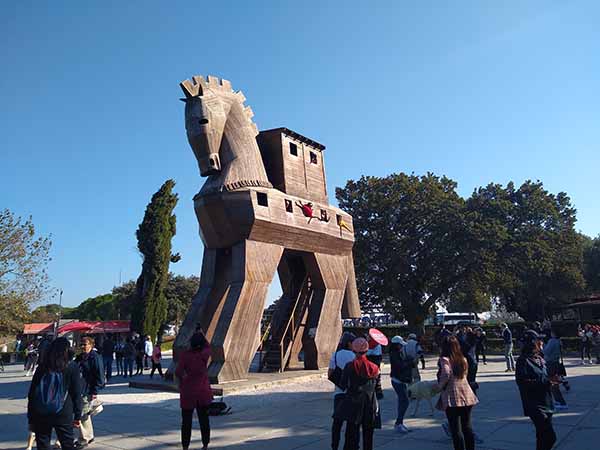 Let's get the obvious one out of the way first.
There is a Trojan Horse at Troy. Well, sort of.
The enormous wooden horse that stands at the entrance to the archaeological site is actually a modern reconstruction, rather than something that survived from the Bronze Age. It is, however, impossible to visit Troy without having your photograph taken with it.
And why not?
The story of the Trojan Horse is one of the most famous tales in Western history, so having a giant wooden horse standing outside Troy feels entirely appropriate.
Just don't expect it to be the original!
The Story of Troy
According to Homer's Iliad, the Trojan War began after Paris, prince of Troy, took Helen, the wife of Menelaus, King of Sparta, back to Troy.
The Greeks assembled a huge force and sailed across the Aegean to attack the city.
The siege supposedly lasted ten years.
Eventually, according to the legend, the Greeks appeared to abandon the attack and sailed away, leaving behind a huge wooden horse as a supposed offering. The Trojans took the horse inside the city walls, unaware that Greek soldiers were hiding inside.
That night, the Greeks emerged, opened the gates and allowed the returning Greek army into the city.
Troy fell.
Whether any of this actually happened is another matter entirely.
There is no archaeological evidence proving that a wooden horse was used to capture Troy, and Homer's account was written down centuries after the period in which the Trojan War is traditionally supposed to have taken place.
But that doesn't make the story any less enjoyable.
The Archaeological Site
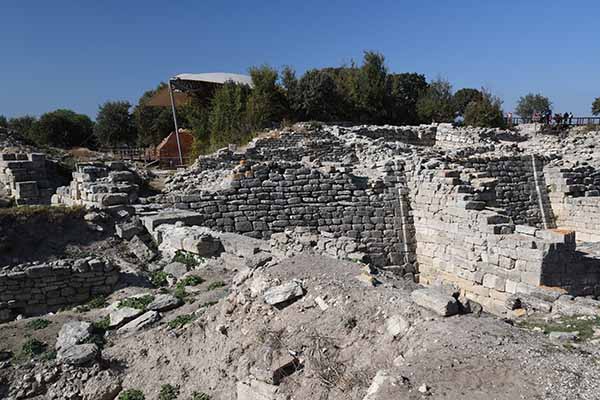 The first thing that strikes you when walking around Troy is that it isn't one single city.
Archaeologists have identified nine major archaeological layers, representing different periods of occupation. In other words, Troy was rebuilt repeatedly over thousands of years.
That makes the site rather confusing at first.
You aren't walking around a perfectly preserved ancient city like Ephesus. Much of Troy consists of foundations, walls, ruins and archaeological excavations.
But that is also part of the fascination.
You are effectively walking through several different Troys layered on top of one another.
Troy VI
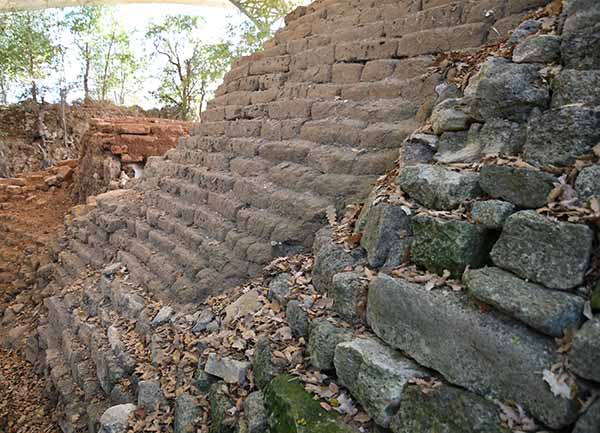 One of the most important layers is Troy VI, generally dated to the Bronze Age and often associated by archaeologists with the period in which a historical Trojan War, if there was one, might have occurred.
The enormous defensive walls are particularly impressive. They give you an idea of what a substantial and well-defended Bronze Age settlement Troy actually was.
Standing beside them, you can begin to understand why the city became such a powerful legend. This wasn't simply a little settlement that Homer somehow turned into a great city.
There really was a significant fortified city here.
Troy VII
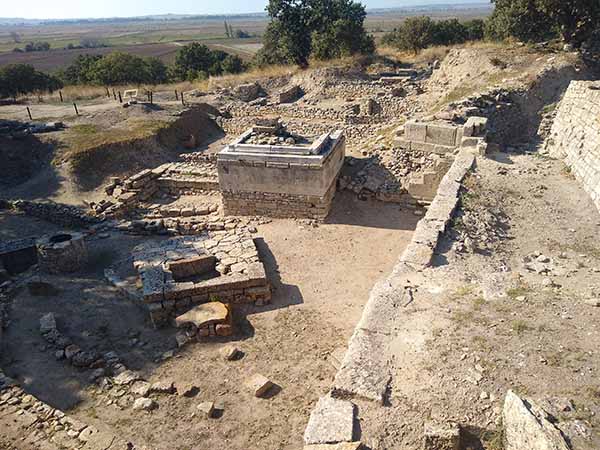 Another important layer is Troy VII, which followed Troy VI.
Archaeological evidence from this period has sometimes been interpreted as suggesting destruction and upheaval, which has inevitably fuelled speculation about whether this could be the Troy described by Homer.
But this is where it is important not to get carried away.
Archaeology can tell us that people lived here, that the city was destroyed and rebuilt and that the settlement was important.
It cannot prove that Achilles fought Hector outside these walls or that Helen was ever here.
And that uncertainty is actually part of Troy's appeal.
Final Thoughts
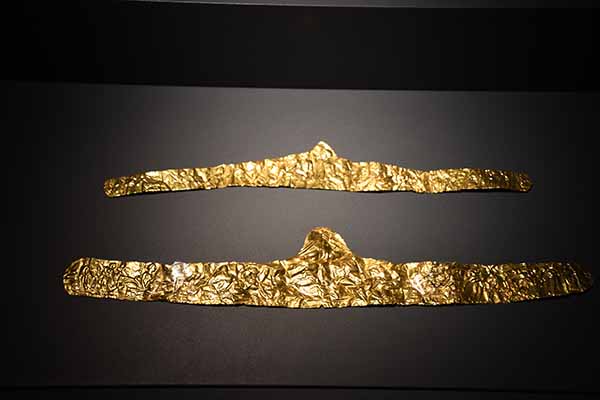 Troy is one of those places where history and mythology become almost impossible to separate.
Did the Trojan War happen? Possibly.
Was there a real Troy? Almost certainly.
Was there a Helen? We simply don't know.
Was there a Trojan Horse? That is even more doubtful.
But somewhere beneath these ruins there was a real Bronze Age city, inhabited by real people who lived, worked, loved, fought and died here thousands of years ago.
That is enough to make Troy fascinating.
And after visiting the temples, palaces and battlefields of Turkey, finishing here seems rather appropriate.
Gallipoli reminds us of the terrible reality of war. Troy reminds us how a war — whether entirely real, partly real or largely legendary — can survive in human imagination for thousands of years.
And somewhere between the two lies one of Turkey's greatest attractions: a place where you can quite literally walk through history and legend at the same time.
Prices correct as at August 2026
Return to Türkiye Home Page