
Thames Path: Oxford - Reading
Section Length: 41.5 miles (66.78 km)
Time Taken: 13 hrs 14 mins
Dates Walked: 6th, 12th, 15th and 19th September 2017
Logistics: This section of the walk was completed in four parts.
The first from Oxford to Abingdon (9.5 miles). For this I parked in Oxford then caught a bus back to Oxford at the end
The second part was Abbingdon to Wallingford (14 miles). For this I drove to Walliingford then caught a bus to Abingdon.
Leg three was Wallingford to Pangbourne (11 miles) I drove to Pangbourne, caught a train to Goring then a bus to Wallingford.
The final leg was Pangbourne to Reading (7 miles) I again drove to Pangbourne then caught a train back to Pangbourne at the end
Time Taken: 13 hrs 14 mins
Dates Walked: 6th, 12th, 15th and 19th September 2017
Logistics: This section of the walk was completed in four parts.
The first from Oxford to Abingdon (9.5 miles). For this I parked in Oxford then caught a bus back to Oxford at the end
The second part was Abbingdon to Wallingford (14 miles). For this I drove to Walliingford then caught a bus to Abingdon.
Leg three was Wallingford to Pangbourne (11 miles) I drove to Pangbourne, caught a train to Goring then a bus to Wallingford.
The final leg was Pangbourne to Reading (7 miles) I again drove to Pangbourne then caught a train back to Pangbourne at the end
Previous Lechlade to Oxford Next Reading to Windsor
Leaving Oxford behind, the Thames Path quickly returns to the countryside, which is probably just as well after the crowds and chaos of the city.
The first part of the walk is through fairly peaceful countryside, with the river winding between meadows and woodland. There are plenty of boats around Oxford, but these gradually become less common as you head downstream.
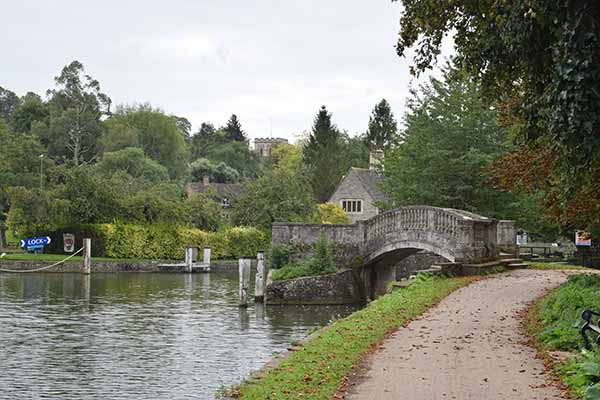 One of the first places of interest is Iffley, where the river passes the attractive village and its old church. The lock here is another reminder that the Thames is very much a working waterway, with the usual collection of boats waiting to negotiate the lock.
Further on comes Sandford-on-Thames, followed by stretches of open countryside. The walking is generally pleasant, although this is still a river valley rather than a series of spectacular viewpoints. For me, the attraction is simply being beside the water with very little traffic and noise.
Eventually the route reaches Abingdon.
Abingdon is an attractive old town and well worth a wander around rather than simply marching straight through it. The river passes around the edge of the town, with several bridges and pleasant riverside areas.
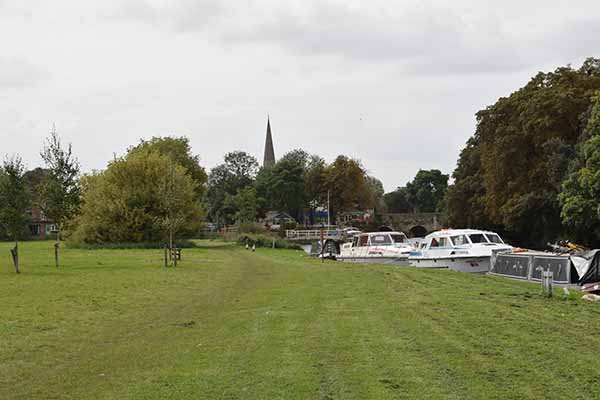 One of the more interesting features is Abingdon Bridge and the old lock area. There is also plenty of history here, although I'm not going to turn this into a history lesson. You can find those elsewhere!
Leaving Abingdon, the path heads through more countryside towards Culham and Clifton Hampden. The latter is one of those quintessentially English Thames villages, complete with an attractive old bridge spanning the river.
The countryside continues through meadows and farmland before the route reaches Dorchester-on-Thames. The village is slightly away from the river but is worth the short diversion, particularly for its impressive abbey.
Back beside the river, the Thames continues towards Wallingford.
Wallingford is another very pleasant riverside town, with a long history and the remains of its medieval castle. It also has a rather nice riverside setting, making it a good place to stop for a while.
From Wallingford onwards the scenery remains predominantly rural, although the number of boats and riverside properties gradually increases. There are plenty of attractive stretches where the river is lined with trees and the path passes through open meadows.
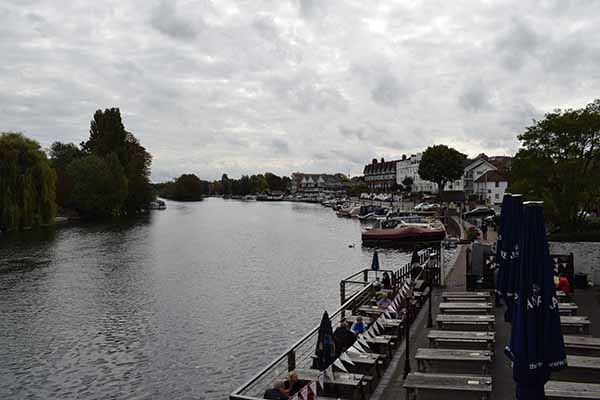 Then comes one of the highlights of this section: Henley-on-Thames.
Henley is probably one of the best-known towns on the Thames and is particularly famous for its rowing. The annual Henley Royal Regatta turns the place into rowing central, but even outside regatta time the river is full of boats and the town has a distinctly affluent riverside feel.
The approach to Henley is particularly attractive, with the river and surrounding countryside making it easy to understand why people have been drawn to this part of the Thames for centuries.
Henley itself is worth taking your time over. There are plenty of old buildings, pubs and cafés, and the riverside is a good place to sit and watch the world go by.
Unfortunately, all good things come to an end and eventually you have to carry on.
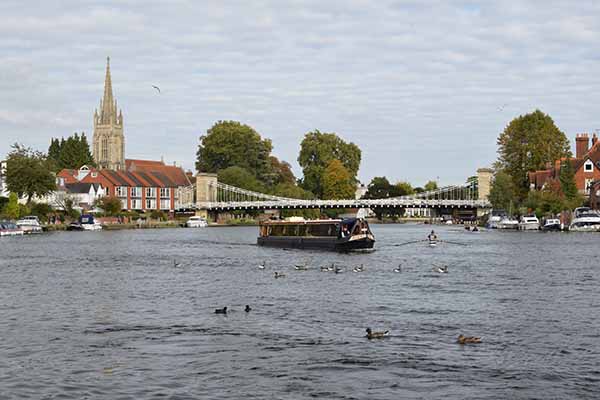 The next stretch takes you towards Marlow, another of the Thames's better-known towns. The river here is particularly attractive, with wooded banks, expensive-looking houses and plenty of boats.
Marlow Bridge is one of the obvious highlights. It is an impressive suspension bridge and provides one of those classic Thames views.
Marlow itself is another attractive town with a pleasant riverside and plenty of places to stop. By now, however, you are beginning to get a feeling that the quiet rural Thames is slowly disappearing beneath an increasing amount of civilisation.
Beyond Marlow the route continues through more countryside, passing locks and small riverside communities before eventually heading towards Maidenhead.
Maidenhead is a much busier place and the character of the walk changes accordingly. The river is still there, of course, but there is considerably more development around it.
The famous Maidenhead Railway Bridge, designed by Isambard Kingdom Brunel, is one of the interesting sights along this stretch. The bridge dates from the nineteenth century and is still carrying trains today, which is a pretty impressive bit of engineering.
Leaving Maidenhead behind, the Thames continues through a mixture of open countryside and increasingly developed areas.
Eventually you reach the outskirts of Reading.
Reading isn't necessarily the most glamorous place on the Thames, but it is an important point on the river and makes a useful end to this section. The Thames is joined by the River Kennet here, and the waterways around the town have a much more industrial and urban feel.
The contrast with the quiet countryside around Oxford is quite noticeable.
By the time you arrive in Reading, you can definitely tell that London is getting closer, more importany psychologically the approach to Reading marks the half way point
.Previous Lechlade to Oxford Next Reading to Windsor
Leaving Oxford behind, the Thames Path quickly returns to the countryside, which is probably just as well after the crowds and chaos of the city.
The first part of the walk is through fairly peaceful countryside, with the river winding between meadows and woodland. There are plenty of boats around Oxford, but these gradually become less common as you head downstream.
One of the first places of interest is Iffley, where the river passes the attractive village and its old church. The lock here is another reminder that the Thames is very much a working waterway, with the usual collection of boats waiting to negotiate the lock.Further on comes Sandford-on-Thames, followed by stretches of open countryside. The walking is generally pleasant, although this is still a river valley rather than a series of spectacular viewpoints. For me, the attraction is simply being beside the water with very little traffic and noise.
Eventually the route reaches Abingdon.
Abingdon is an attractive old town and well worth a wander around rather than simply marching straight through it. The river passes around the edge of the town, with several bridges and pleasant riverside areas.
One of the more interesting features is Abingdon Bridge and the old lock area. There is also plenty of history here, although I'm not going to turn this into a history lesson. You can find those elsewhere!Leaving Abingdon, the path heads through more countryside towards Culham and Clifton Hampden. The latter is one of those quintessentially English Thames villages, complete with an attractive old bridge spanning the river.
The countryside continues through meadows and farmland before the route reaches Dorchester-on-Thames. The village is slightly away from the river but is worth the short diversion, particularly for its impressive abbey.
Back beside the river, the Thames continues towards Wallingford.
Wallingford is another very pleasant riverside town, with a long history and the remains of its medieval castle. It also has a rather nice riverside setting, making it a good place to stop for a while.
From Wallingford onwards the scenery remains predominantly rural, although the number of boats and riverside properties gradually increases. There are plenty of attractive stretches where the river is lined with trees and the path passes through open meadows.
Then comes one of the highlights of this section: Henley-on-Thames.Henley is probably one of the best-known towns on the Thames and is particularly famous for its rowing. The annual Henley Royal Regatta turns the place into rowing central, but even outside regatta time the river is full of boats and the town has a distinctly affluent riverside feel.
The approach to Henley is particularly attractive, with the river and surrounding countryside making it easy to understand why people have been drawn to this part of the Thames for centuries.
Henley itself is worth taking your time over. There are plenty of old buildings, pubs and cafés, and the riverside is a good place to sit and watch the world go by.
Unfortunately, all good things come to an end and eventually you have to carry on.
The next stretch takes you towards Marlow, another of the Thames's better-known towns. The river here is particularly attractive, with wooded banks, expensive-looking houses and plenty of boats.Marlow Bridge is one of the obvious highlights. It is an impressive suspension bridge and provides one of those classic Thames views.
Marlow itself is another attractive town with a pleasant riverside and plenty of places to stop. By now, however, you are beginning to get a feeling that the quiet rural Thames is slowly disappearing beneath an increasing amount of civilisation.
Beyond Marlow the route continues through more countryside, passing locks and small riverside communities before eventually heading towards Maidenhead.
Maidenhead is a much busier place and the character of the walk changes accordingly. The river is still there, of course, but there is considerably more development around it.
The famous Maidenhead Railway Bridge, designed by Isambard Kingdom Brunel, is one of the interesting sights along this stretch. The bridge dates from the nineteenth century and is still carrying trains today, which is a pretty impressive bit of engineering.
Leaving Maidenhead behind, the Thames continues through a mixture of open countryside and increasingly developed areas.
Eventually you reach the outskirts of Reading.
Reading isn't necessarily the most glamorous place on the Thames, but it is an important point on the river and makes a useful end to this section. The Thames is joined by the River Kennet here, and the waterways around the town have a much more industrial and urban feel.
The contrast with the quiet countryside around Oxford is quite noticeable.
By the time you arrive in Reading, you can definitely tell that London is getting closer, more importany psychologically the approach to Reading marks the half way point
.Previous Lechlade to Oxford Next Reading to Windsor